Dumb Phones aren't a smart idea to cure smartphone addiction

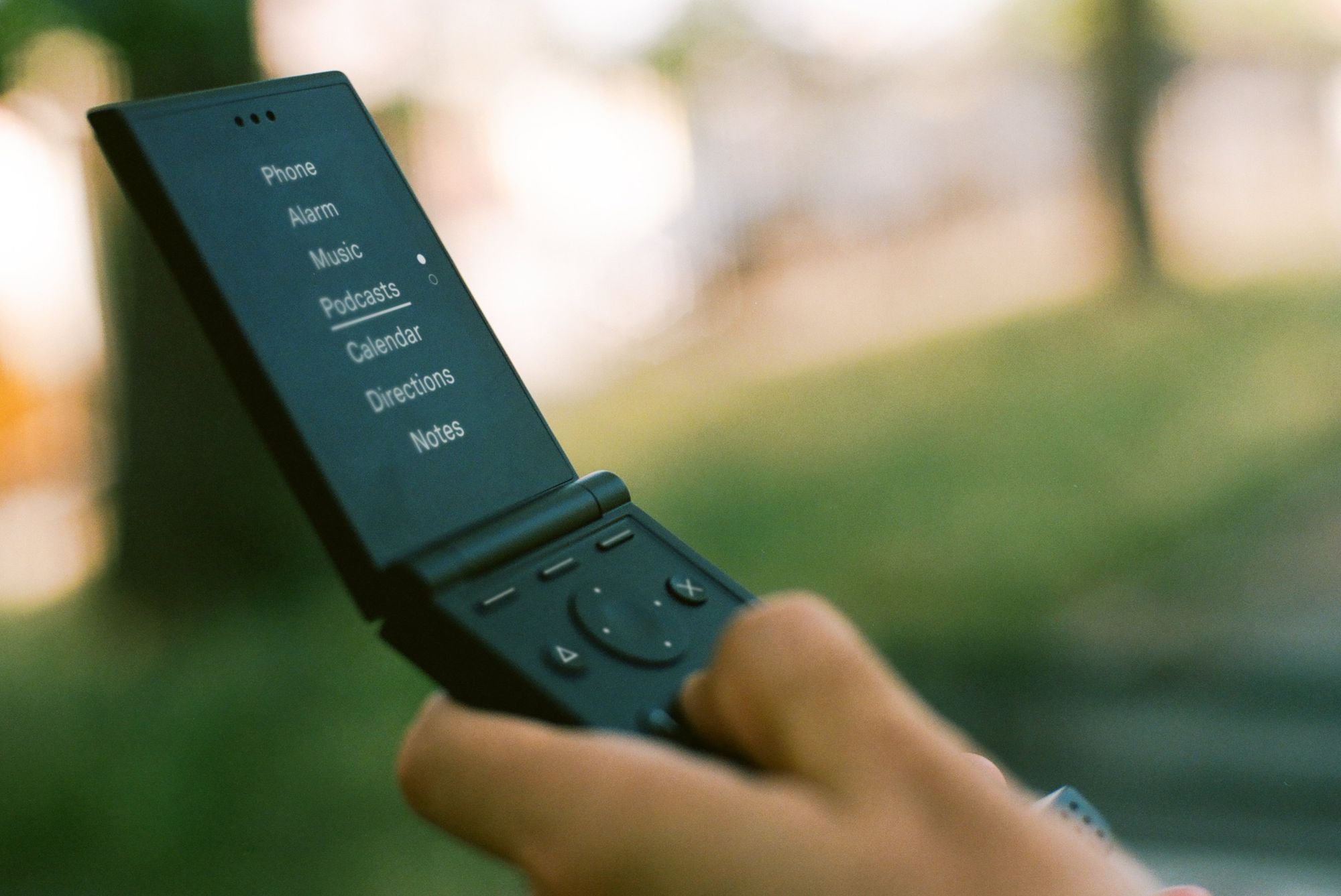
The premise that if you take away social media apps from people's phones and keep only what's essential for them to get by their day is flawed on multiple levels.
- There are three ways of curing any addiction: Removal, Substitution, and Habit Change, Removal is the most rudimentary form that doesn't always work.
What dumb phones, devices like Brick , and other screen time apps try to do is solve the problem by removing the 'bad' apps. They punish the user by limiting access to apps that are likely to make them addicted to the software.
So if smartphone addiction is being treated like nicotine addiction, removing social media applications abruptly isn't very effective [1] and chances are you'll come back to it.
A much more effective method would be to look for a habitual change in how we use our smartphones and a re-assessment to our relationship with technology in general, it shouldn't come as a surprise, that people are already doing that. - Smartphone addiction is not about a single app: It's a cycle of rewarding engagement and continuous use, that when reaches a saturation point leads to addictive software application that over time has led to smartphone addiction.
It's not the third party software or a single type of application that's a problem. It's the scale with which this software works, that has led to the unintended consequence of applications designed to be addictive. - The zeitgest is that people want to use less technology not buy another gadget to cure the previous one's addiction: If you talk to youngsters today, people are done with tech and their insidious business models. They assume the worst of every tech company, and they're wary of new "products".
During my own user research, what I've found is that young adults cherish analog tools a lot more for focused work. The role of tech in our lives then should then be to step back and help them continue to use those tools. Providing help when they need it.
At the heart of the smartphone addiction problem is the fact that we've put everything behind a single slab of glass, which means that a single screen controls much of our interaction with everything and because everything from entertainment to productivity is vying for the same slot of our attention, the result is a miasma of applications that no one wants to use.
The solution to that might not be more technology, but for tech to take a step back and empower people to use analog tools more.
Further Reading
[1] : M. M. C. van Wezel, E. L. Abrahamse, and M. M. P. Vanden Abeele, “Does a 7-day restriction on the use of social media improve cognitive functioning and emotional well-being? Results from a randomized controlled trial,” Addict Behav Rep, vol. 14, p. 100365, Jun. 2021, doi: 10.1016/j.abrep.2021.100365.
[2] A. Monge Roffarello, View Profile, L. De Russis, and View Profile, “The Race Towards Digital Wellbeing,” Proceedings of the 2019 CHI Conference on Human Factors in Computing Systems, pp. 1–14, May 2019, doi: 10.1145/3290605.3300616.
[3] I. A. Anderson and W. Wood, “Social motivations’ limited influence on habitual behavior: Tests from social media engagement,” Motivation Science, vol. 9, no. 2, pp. 107–119, 2023, doi: 10.1037/mot0000292.
[4] B. Victor, “A Brief Rant on the Future of Interaction Design.” Accessed: Oct. 05, 2025. [Online]. Available: https://worrydream.com/ABriefRantOnTheFutureOfInteractionDesign/
Addendum
Yes, Smartphone addiction is also about the loneliness epidemic that engulfs our generation right now. But there's a fine line between :
- Conscious use of addictive software as a form of escape,
- An insidious use of design patterns to keep you hooked onto a software.
- Entertainment applications winning our attention because they're competing in an A/V medium.