Computers need a paradigm shift
Computers need to evolve from machines that augment our reality by emulation on a screen, to tools that are truly helping us think better.

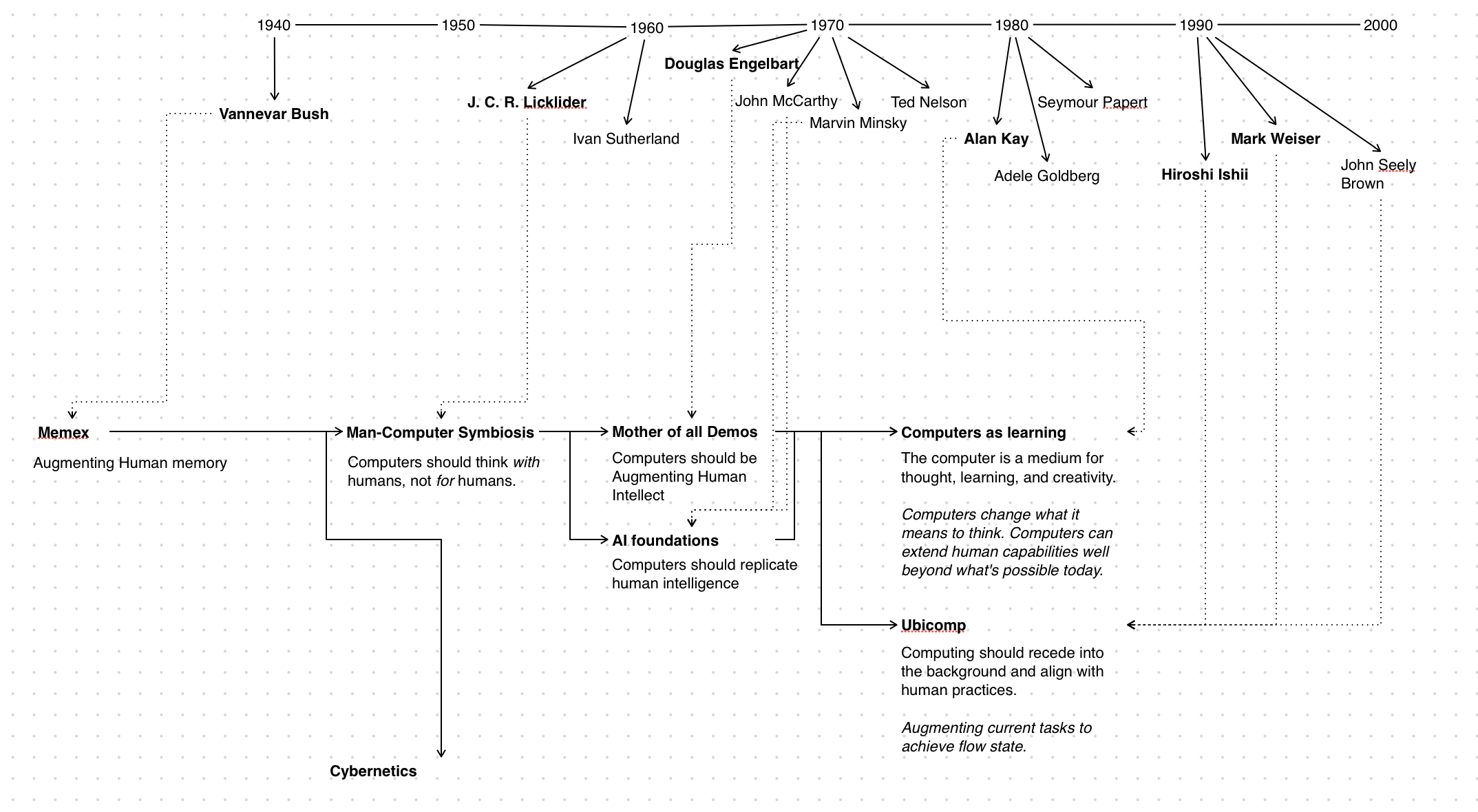
The history of computers and the vision of computing is intricately tied to the history and study of tools, just how a bicycle helps people commute from A to B, just how scissors help them cut paper, and just how eyeglasses help them see the world more clearly; Computers are tools to improve human intellect. (Jobs called them the bicycle for the mind, Engelbart called it Augmenting Human Intellect, Alan Kay sees them as a tool that can amplify Human capabilities; but these are more or less saying the same thing, if you could have a tool that helped you think better, it'd be a computer).
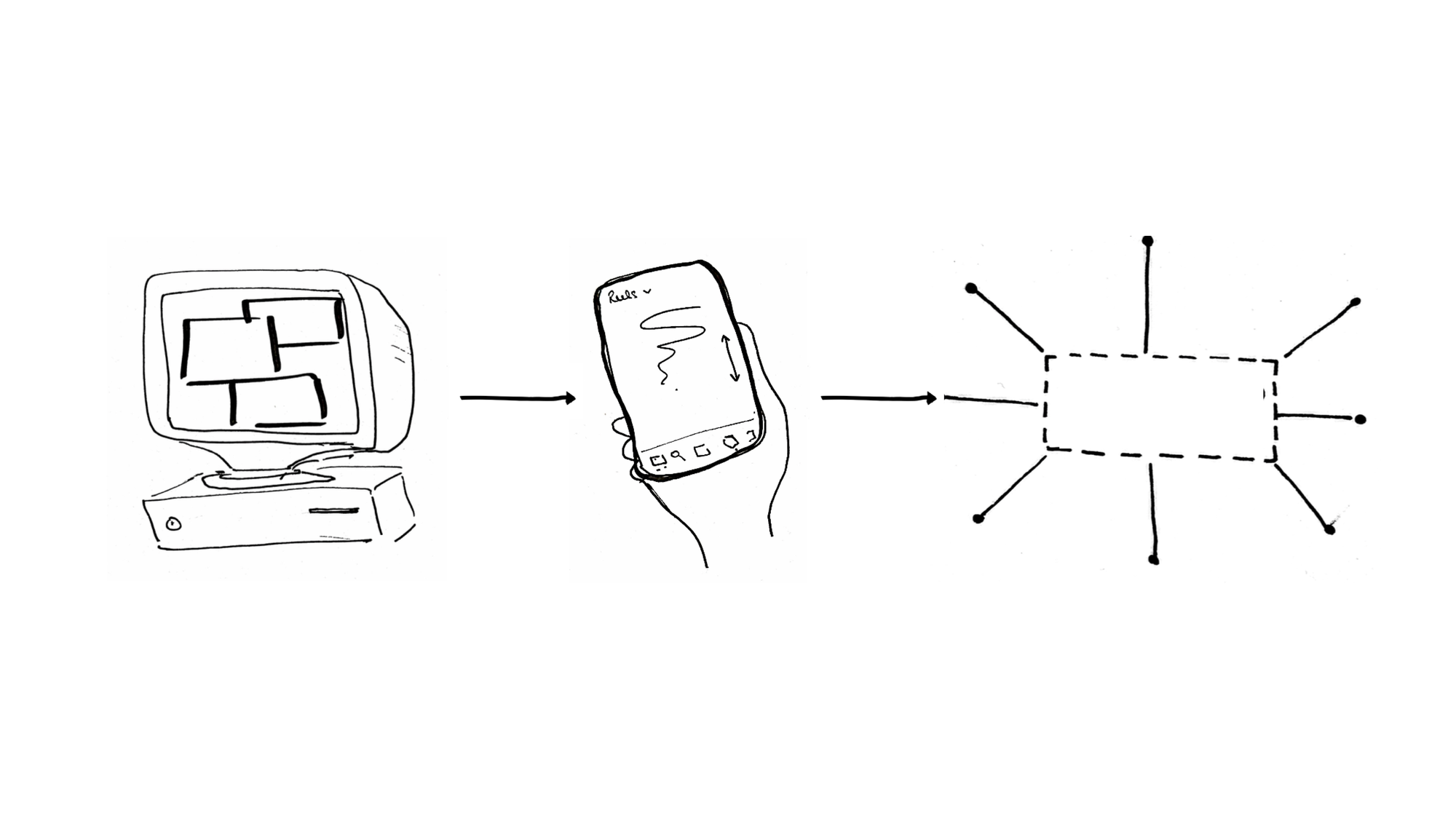
For years, augmenting human intellect has begun with emulating the world around us. The Xerox Alto screen was a paper shaped panel, designed to replicate a piece of paper and then add capabilities to it that wouldn't be on the said paper.
The years that have followed put the modern computer at the center of our lives. The computer became popular, the screens became richer in color, they became more immersive, borrowing from real world paradigms to help people get things done more easily. The computer became the medium for audio-visual content creation and consumption. Then we put it in our pockets. The Smartphone became more popular than anything else in computing history. It became the center for everything. "There's an app for that" became the slogan of modern computing and every service got digitized, we started maxing out on the emulation of our world concept because that became the de-facto way to improve it.
The visually rich and dynamic medium of the touch-screen makes the tool more visible than ever, it requires our undivided attention, and because it's the everything tool, our attention is being contested for, by literally everything. And because attention is all that matters for a successful app today, it's given rise to the attention economy.
The smartphone as a medium for computing has gone horribly wrong. Instead of improving our thinking abilities, it's increasingly harvesting our attention, making us more isolated, and serving as an escape from the loneliness that comes from that isolation. It's gone from a device that helped us get things done on the go, to a device for entertainment, and transformed into the loneliness escape tool whose latest innovations might even be stunting our ability to think.
We need a reset. We need to rethink how we've chosen to augment human intellect for the last 50 years. So far, we've chosen to emulate the world and improve it through software. The original tools were constrained by technology, but today that's not the case. Today we can augment our reality, without emulating it, we can let people be more present with the environment without asking them to use a screen for everything.
We must augment human intellect, by meeting people where they are, by making computers participate in the nature, rather than take you away from it.
I have spent the last two years of my life, answering this question by building prototypes, and products (that I will share soon); including research into creating distraction-free computing at UC Berkeley.
And it's telling that last we had foundational research on how computing must proceed was 30 years ago. We've since then been living a fragmented vision of computing, with founders and technologists being more interested in growth than building out a vision.
Here's are some ideas for how we can build a healthier future of computing:
- Move away from one device that does it all, to intentional products that do fewer things better. We don't need tech at all times, we only want it when required.
- Intentional products have the freedom to be low-tech, or even analog. Computing needs to meet people where they are. If that means low-tech or no-tech solutions, so be it. Not everything needs to be a data-harvesting WiFi enabled machine.
- Personal Computing doesn't mean isolating computing, we must move away from technologies that encourage isolation.
- Let's get back to Augmenting Human Intellect and that begins with veridical information i.e. truth. We must build truth seeking machines rather than vessels of misinformation; machines that make us more curious. Only then can we enable people to learn, and be better versions of themselves.
- Let's look beyond screens. Not everything needs to have the information fidelity of a piece of paper. Somethings can be felt, and sensed through other sense organs. True augmentation is augmentation of all senses.
- Build good tools. A good tool helps people perform actions by receding into the background, and that doesn't mean becoming physically invisible, it means that the person's focus remains on performing the task, and the tool's so good at it, that it helps them reach a flow state, receding from their conscious action.
Think about how, when you wear eyeglasses, you're barely thinking about the glasses themselves, you're more focused on seeing the world. Computers need to be like that.