Why IMAX 70mm matters and why it's unsustainable
A taxonomy of all the different film formats, how did we reach to IMAX 70mm, why it matters and what's next for high-resolution immersive analog filmmaking.


When I came out of the regular 70mm screening of The Odyssey last week, this post was going to be titled why 5 perf 70mm should be the format that everyone makes movies for. Things have changed since then. I saw The Odyssey in IMAX 70mm, it's clearly the more superior viewing experience. I did a little more digging into why that is, and what makes it ultimately unsustainable.
But first the taxonomy of movie formats.
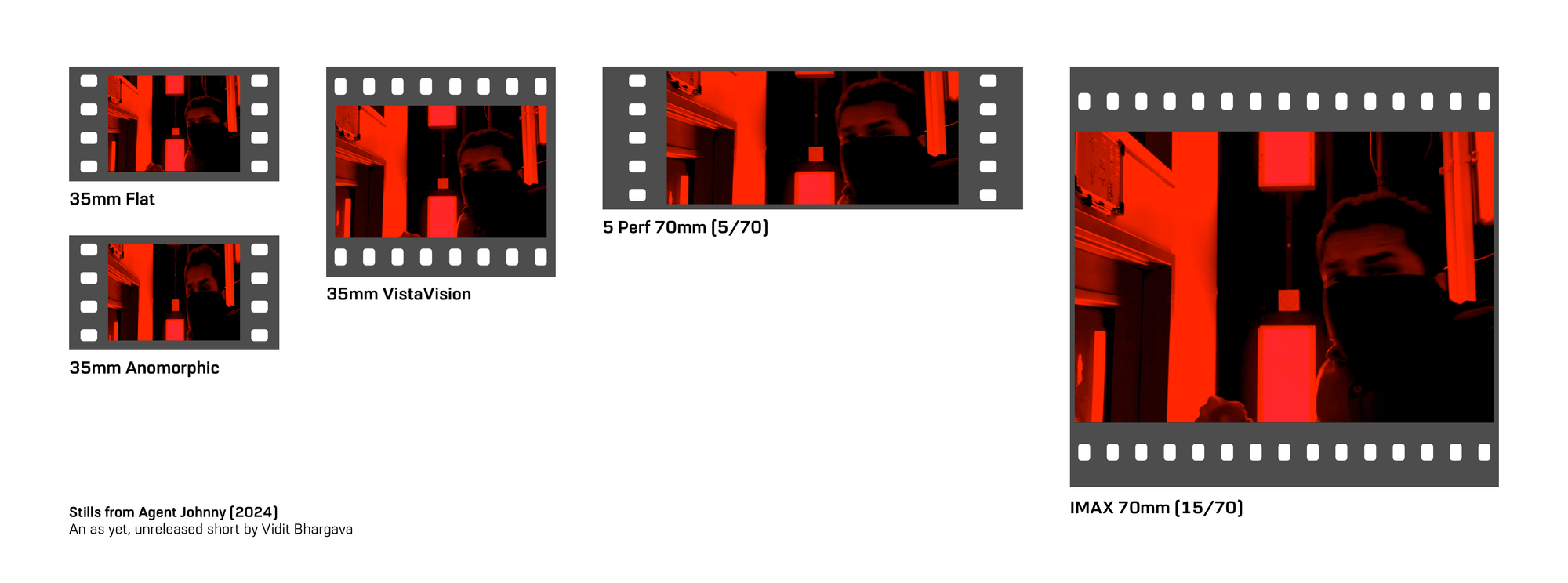
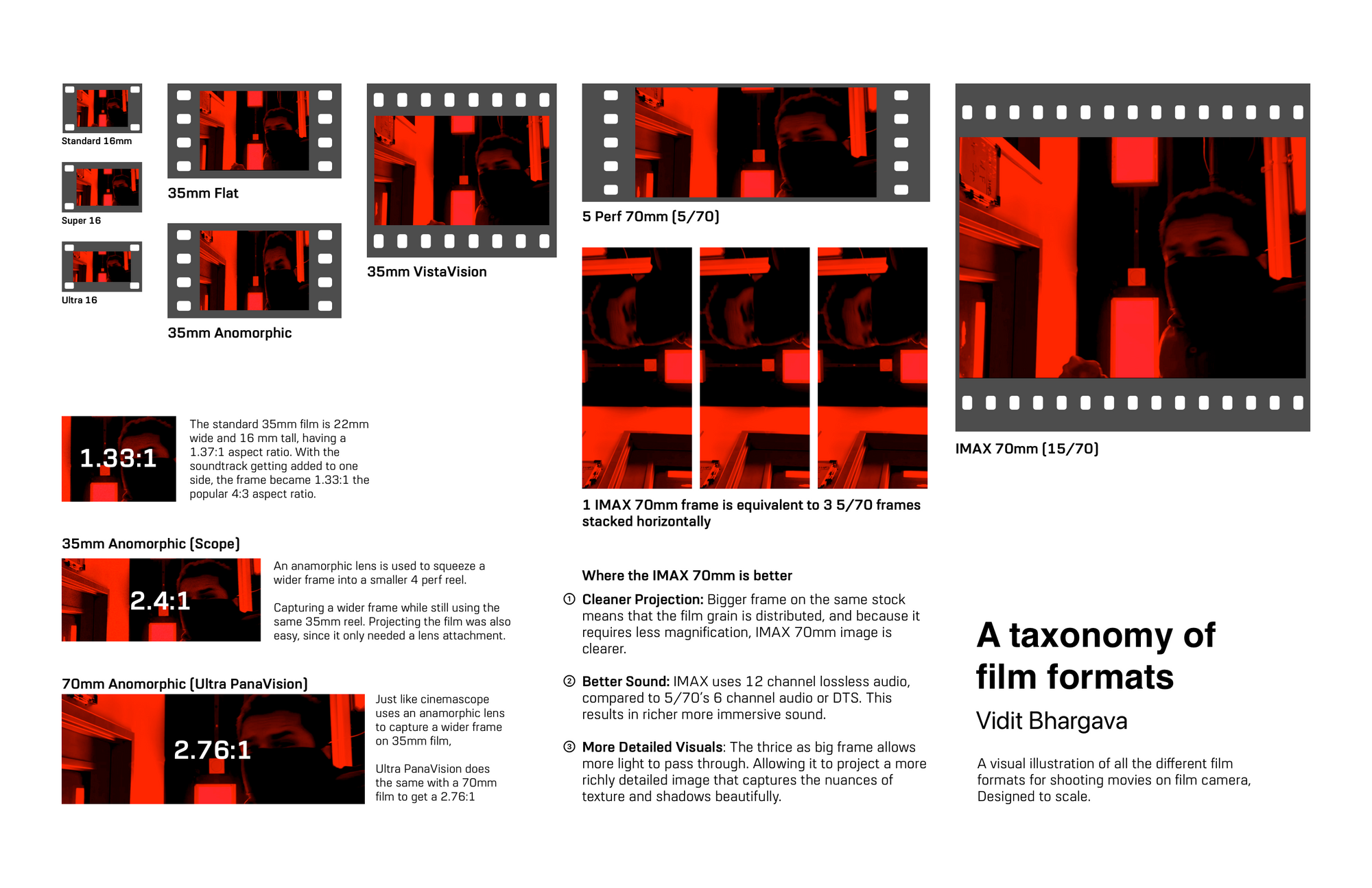
These are the different film formats that have been popular through the many generations of film capture. When someone says a 35mm film project, what they mean is that the film reel that has a width of 35mm was used to project the film.
A smaller film means bigger magnification required to fill the same screen size or smaller screen-sizes. A bigger film allows for a significantly bigger projection with better image quality.
The Cinematic experience is all about creating an immersive experience, picking as big a screen as possible to completely engross the viewer in the experience.
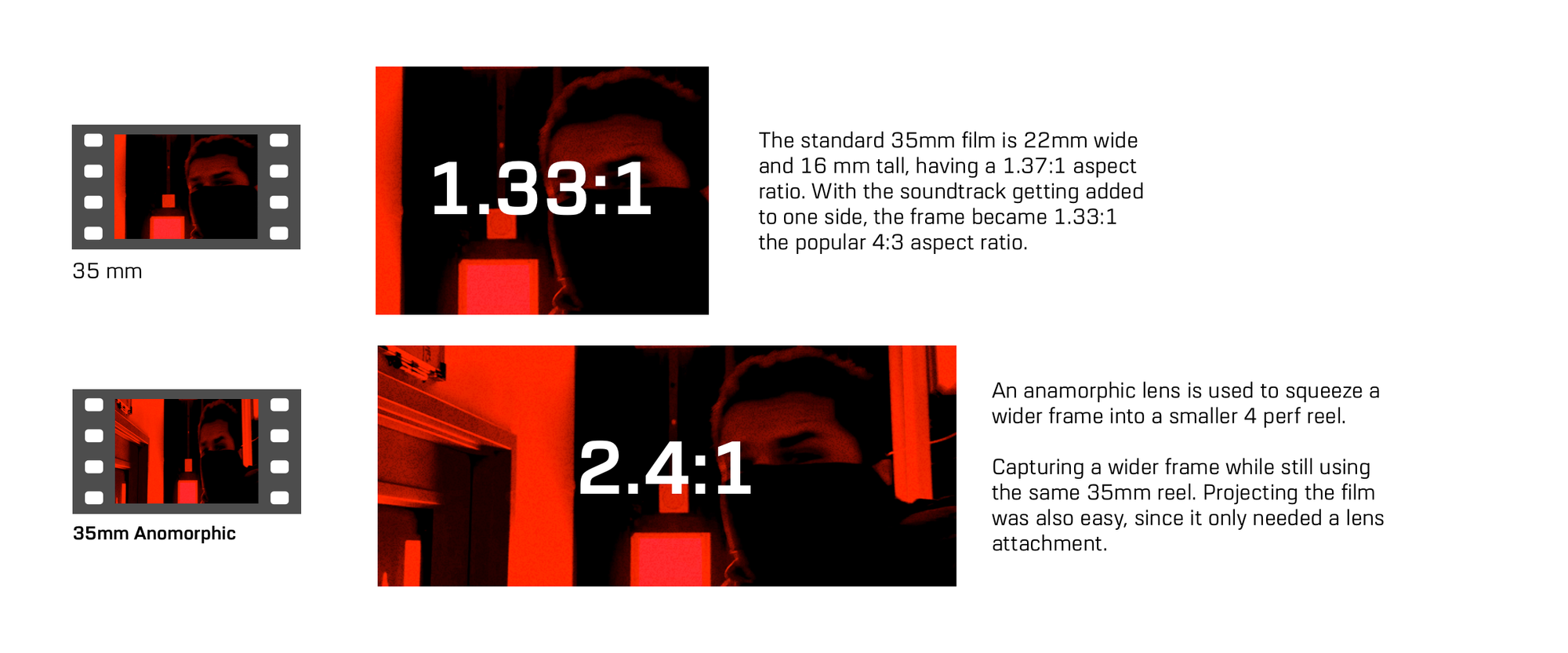
The very first step in the quest for a wider, more immersive experiences was the cinemascope or the anamorphic lens. It was able to squeeze a much wider frame into the same 4 perf 35 mm reel. Creating a more immersive experience.
The 2.4:1 aspect ratio, known as scope, became the industry standard for years to come. Given how cheap it was to make widescreen cinema with just a lens attachment to the 35mm film projection.
The introduction of the 5 perf 70mm reel meant that you could get a similarly wide picture in fact slightly taller, with a bigger negative. Which meant lesser magnification from the projectors, better image quality, and bigger screens.
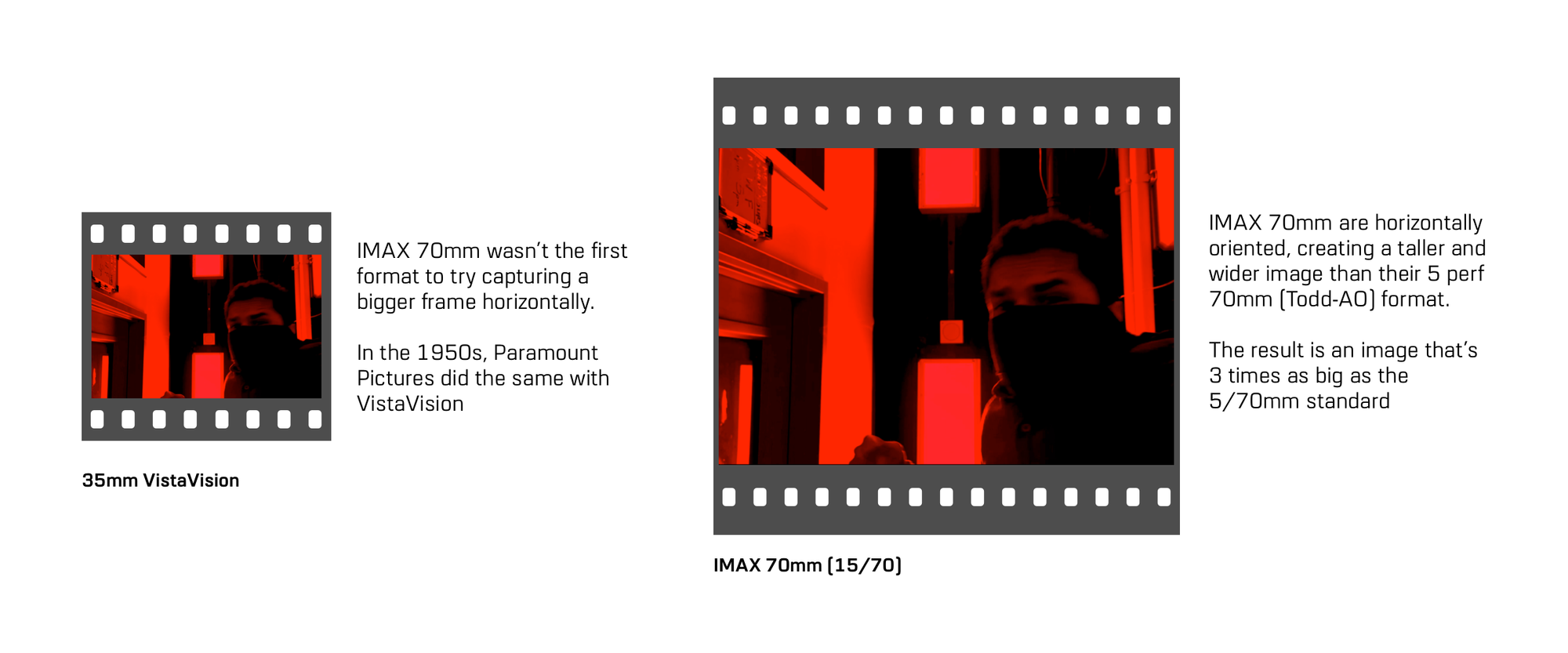
The IMAX 70mm takes this one step further. It creates a horizontally fed 70mm reel, that's much bigger than any of its counterparts, creating the highest resolution you can get from an image.
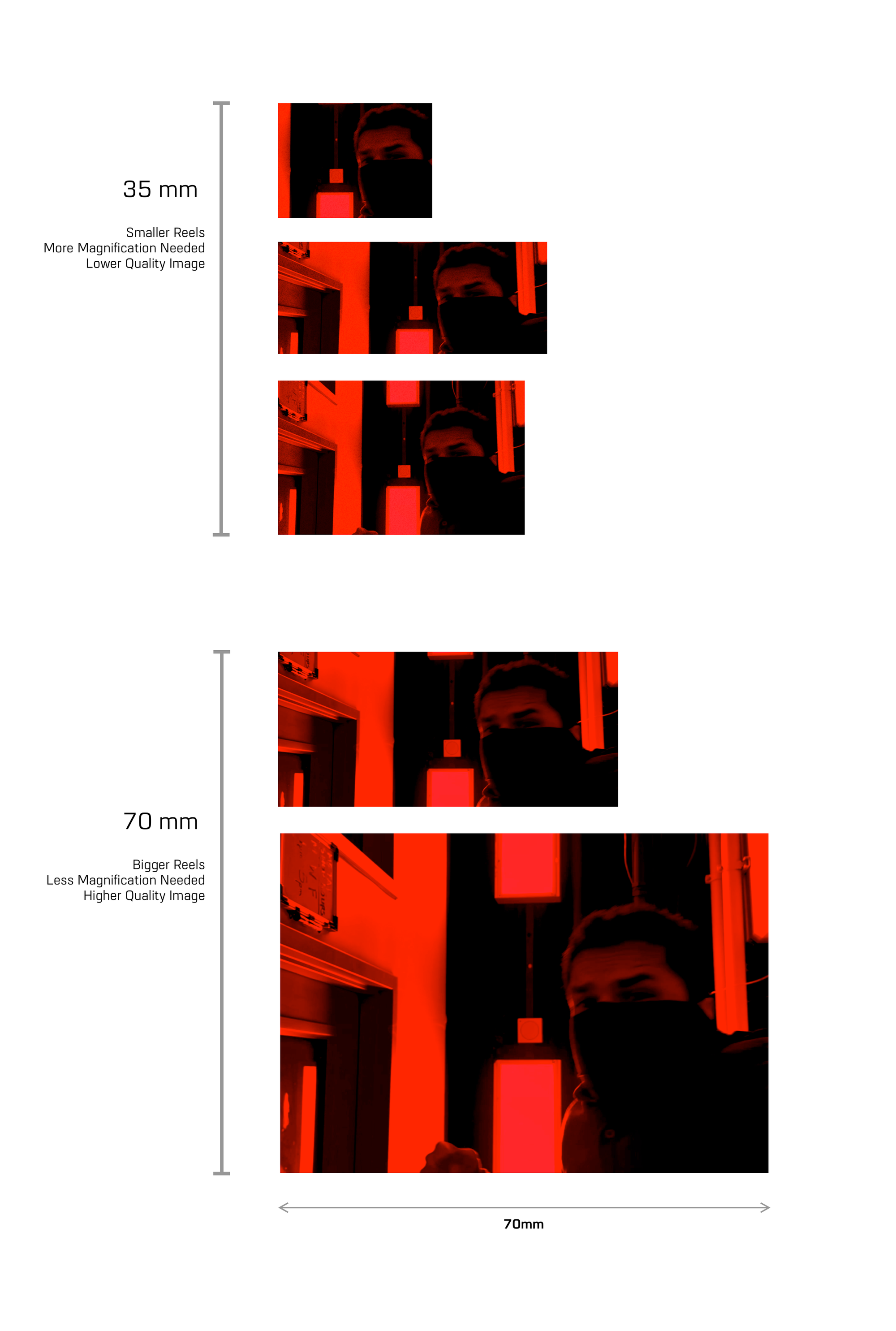
Difference between 70mm and IMAX 70mm
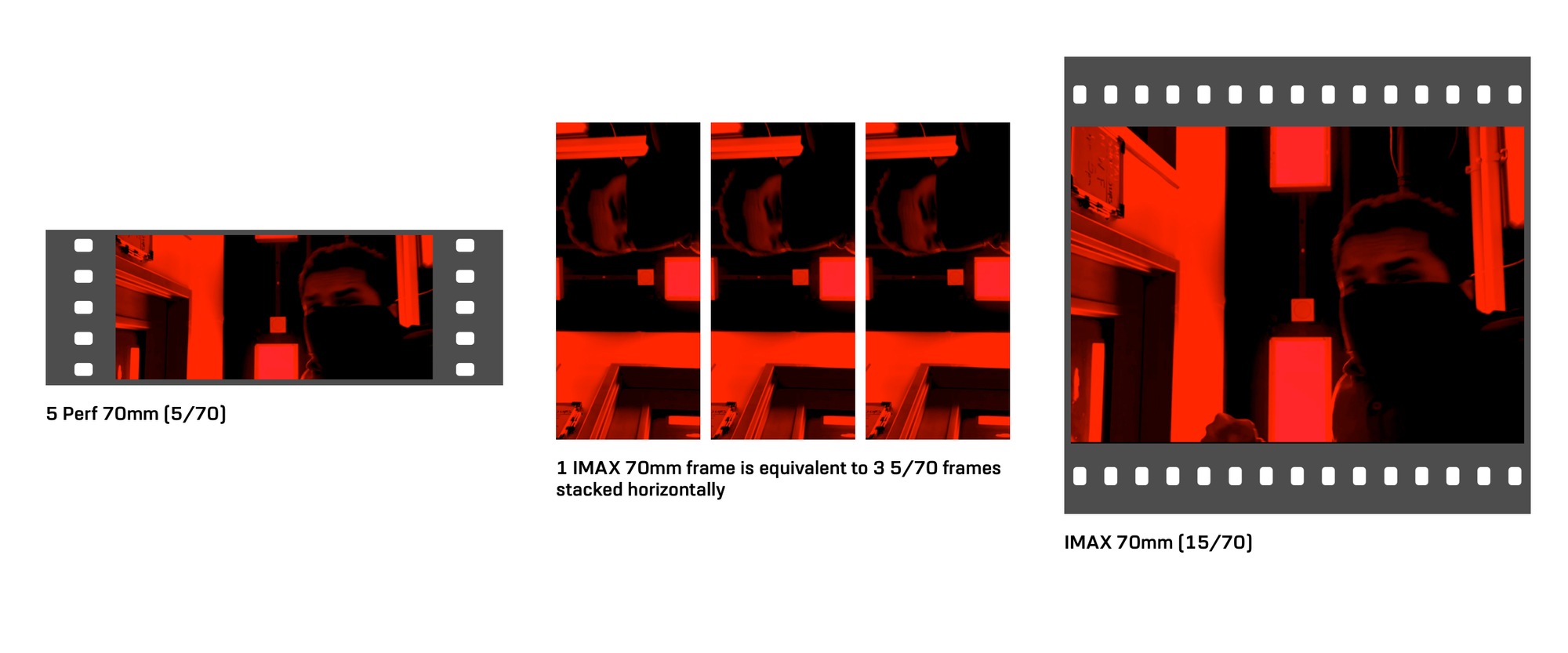
Smoother image
The IMAX 70mm frame is thrice as big as the standard 5/70 frame. Because it’s using the same 65mm film stock, and just placing it horizontally.
This means the chemical "grain size" embedded in the film emulsion is identical, and because it’s a much bigger frame, the magnification ratio is lower than that of the standard 70mm film, which leads to an image that minimizes the grain to the extent that it’s barely visible.
Rich details are clearly visible
The significantly larger negative allows for more light to pass through. Allowing it to project a more richly detailed image that captures the nuances of texture and shadows beautifully.
In the Odyssey, you can experience that in scenes that show the sea. It’s a much more richly detailed visual with better color and detail.
Better sound
The sound on an IMAX 70mm is presented through a separate 12 channel lossless audio track, delivered on disk. It’s not part of the reel; unlike the standard 70mm reels which featured a 6 channel audio track on the film itself.
This results in a better sound. In my experience, the sound was one of the biggest differentiating factors with IMAX 70mm, it’s so much louder, and for a movie like The Odyssey where the soundtrack is as much part of the experience as the characters in the movie itself, it’s night and day.
Projection improvements
IMAX also made improvements to the projection tech. While the standard 70mm projectors use mechanical systems to pull each frame at a high speed, the IMAX system uses a vacuum system to pull frames so that they stay flat against the camera lens. Eliminating any micro-jitters that standard 70mm film projections have.
Simply put IMAX 70mm is the best image quality you can get from a projection system today. It surpasses digital projections by a mile, its closest competitor the 5 perf 70mm projection, pales in comparison.
| Feature | Standard 70mm Film | IMAX 70mm Film |
|---|---|---|
| Projector Feed | Vertical | Horizontal |
| Frame Size | 5 perforations tall | 15 perforations wide |
| Total Image Area | Baseline large format | 3x larger than standard 70mm |
| Aspect Ratio | 2.20:1 (Widescreen) | 1.43:1 (Tall / IMAX format) |
| Estimated Resolution | ~6K to 8K digital equivalent | 8 to 12K digital equivalent |
| Audio | 6 channel audio / DTS | 12 channel lossless digital audio |
Why can’t you just crop to 1.43:1?
As you probably know by now, with movie theaters, the hunt is about immersing the viewer in the largest possible video that plays well. Sure, one way to do that would be to make a smaller image and letterbox it to fit on a widescreen.
The issue there is that it’ll look much worse than fitting the entire image and losing some of the peripheral composition. Filmmakers are generally really good at framing there shots for scope and 70mm frames so you never really miss critical details.
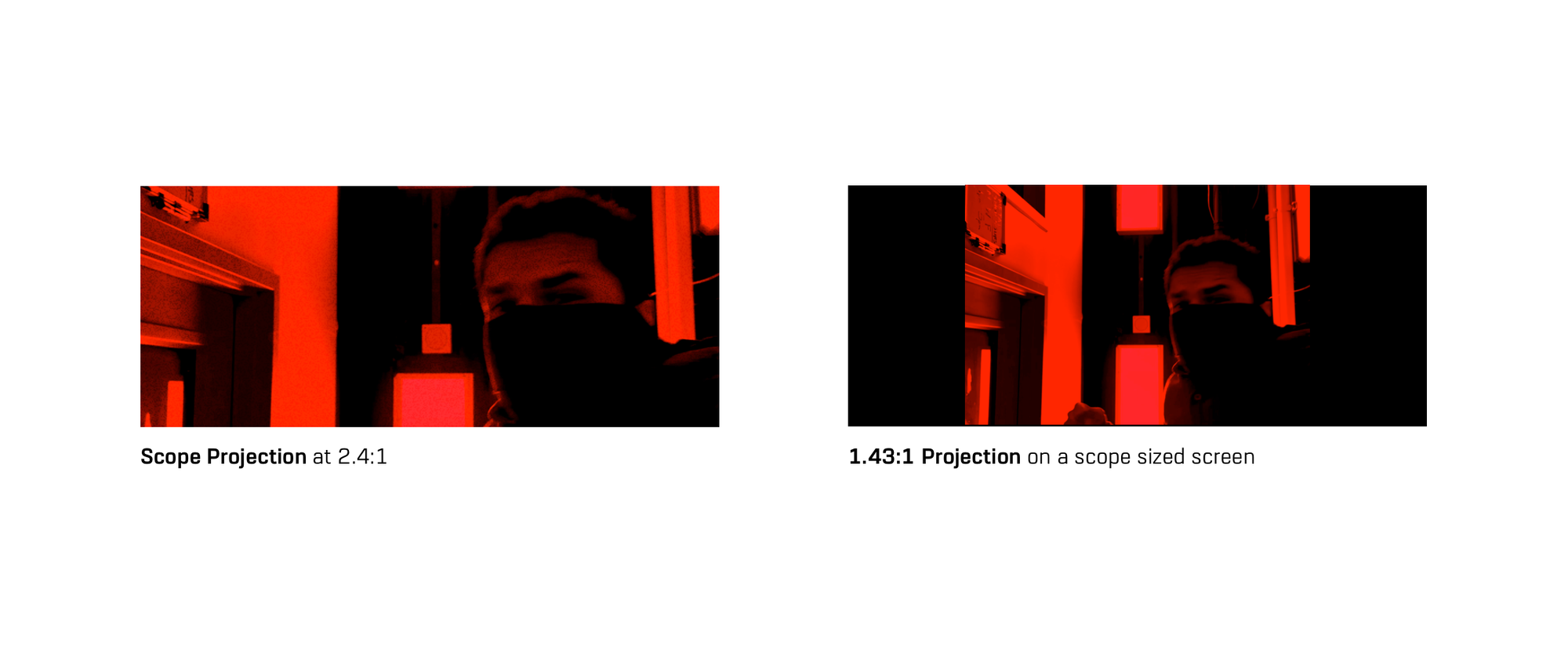
It’s also an issue no one has really had to face, prior to The Odyssey. The first film to be entirely shot on a horizontally rolling 65mm stock with 15/70 framing. Prior IMAX 70mm films have used a combination of IMAX film cameras, and 5/70 perf (Oppenheimer), or VistaVision (One battle after another) to film their movies. So naturally, watching it in either of those formats would yield great results for the most part.
The other issue is that IMAX owns the rights to its IMAX 70mm projections including viewing in the 1.43:1 aspect ratio. Which is even bigger of an issue than it seems.
Why this is unsustainable
IMAX has successfully managed to turn what was once a commodity into a highly differentiated experience, that people want to pay for. IMAX 70mm is a selling point today. People flock the screens for a unique experience that’s unlike any other, and IMAX can’t keep up with the demand. There are only 41 locations that can screen it in true IMAX and the scarcity adds to the appeal. The Odyssey’s IMAX 70mm shows are sold out for months (even if the next door Dolby auditorium is practically empty)
That’s a good thing right? Depends on the lens you are looking at with. Sure, in the short run it’s a novelty experience that filmmakers would be happy to support. Only 41 cinemas in the world can experience it, it’s unique, and coveted. But as demands for these grow, IMAX will have to confront with the question of how this reaches more people.
For one thing, IMAX reels are huge and unwieldy. Transporting and storing them is a menace. Not only that, the projectors themselves are sort of a lost art. These are 50 year old machines whose parts are difficult to source now and making more of them is infeasible, so IMAX finds and retrofits old projectors. And even if IMAX were to make more of them, new IMAX 70mm screens need a lot of space. The projection screen needs to be massive. Which lowers the pool of possible theaters even further.
This is not an easy problem to solve. For one the logistics of making a highly specialized projector more accessible are going to be challenging. Traditionally specialized projections have not done well. The biggest reason for Anamorphic projection’s success was that it relied on the already widely available 35mm projectors, and required only a simple lens attachment.
IMAX is a closed standard, that gives IMAX the company a lot of success, but also acts as a bottleneck for the prevalence of its technology. Everything needs to go through them, and few cinemas across the world are willing to invest in giant auditoriums with giant screens that will cater to a large audience at a time that would support their standards.
And even if they were successful, it would then create a monopolistic situation where every cinematic experience would practically have to go through them.
So what’s the future of large format films? I believe it still is the standard 70mm format.
There are enough 70mm projectors extant in the world that can handle 5/70 vertical loading films, the image is still high resolution, if not as good as the IMAX 70mm, and it’s not controlled by one entity. So anyone can make a 70mm film. More importantly people still know how to make 70mm projectors.
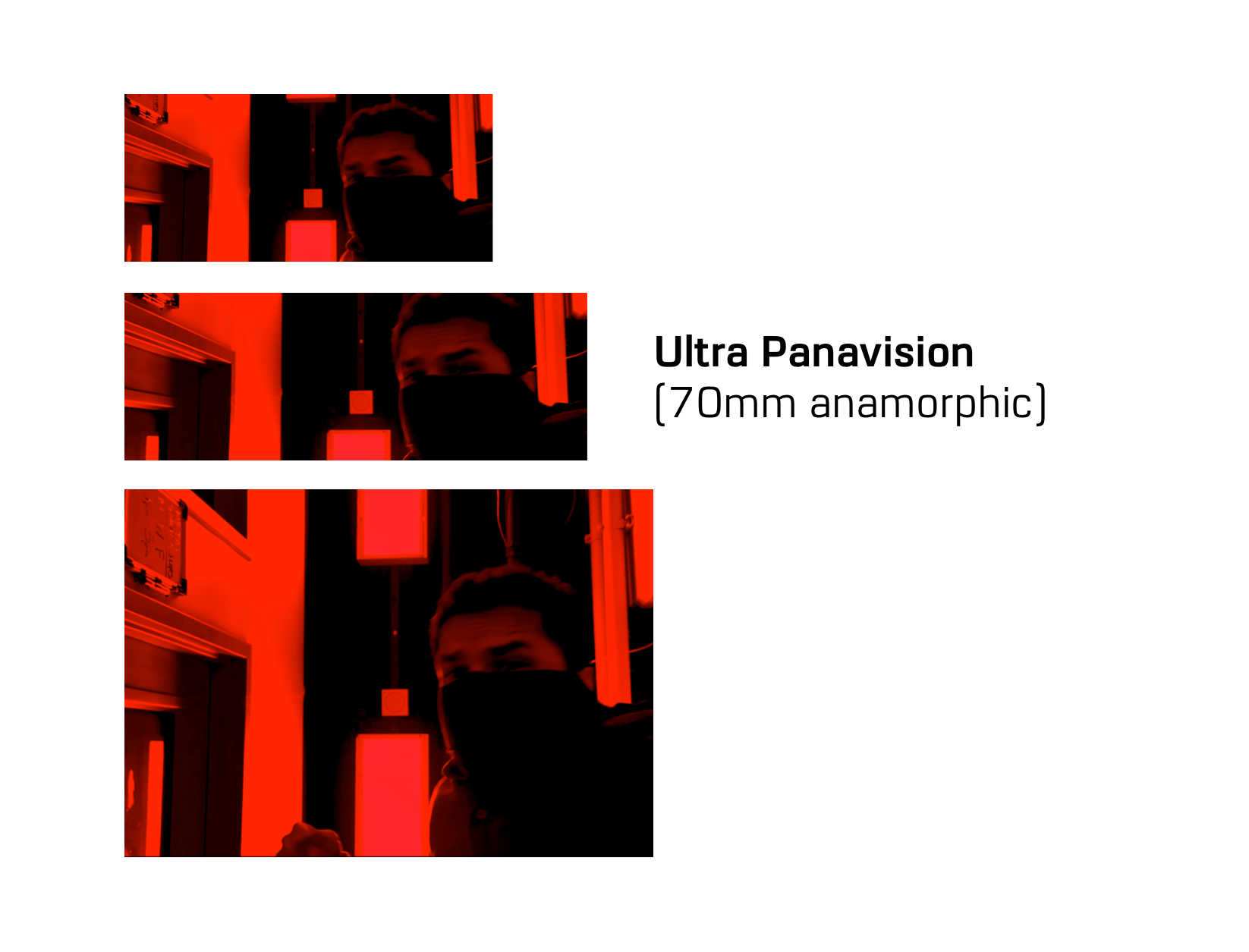
There are other formats that would be good to explore. UltraPanavision (The Hateful Eight) offers are wider 70mm projection, using the same technique as anamorphic 35mm. The image is close to IMAX 70mm in width at least, and more accessible as a format that fits nicely in scope screens.
The much lesser known 8/70 vertical film offers an aspect ratio closer to the IMAX 70mm aspect ratio, while not being as unwieldy as an IMAX70mm film or requiring specialized projectors. Retrofitting old 70mm projectors to push 8 perfs at a time is much less of a challenge than making new IMAX 70mm projectors.
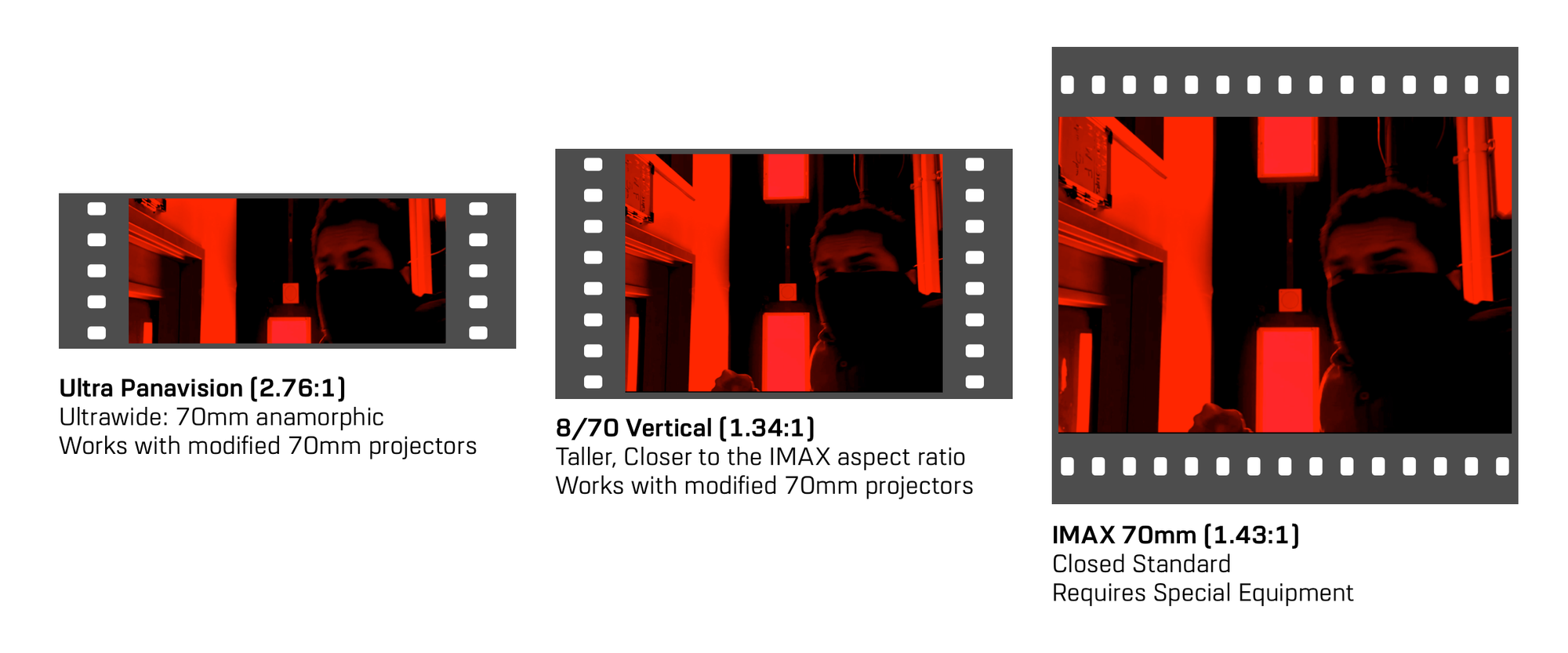
However this would still require bigger screens, and it’s an odd compromise that may not work for most, and may only be viable in the scenario where 15/70 projectors are no longer feasible to run but theaters still have bigger screen.
It’s fascinating to watch a movie on a giant IMAX 70mm. I feel lucky and privileged to live near a theatre that supports that. That said, I strongly believe going to movies should not be about privilege, or guarded behind proprietary tech, for it’s a form of cheap and accessible entertainment for so many people.
I would love to see, more accessible film formats show up in the future.
Download it in poster format here